June 01, 2026
Gardening Tips For Healthy Backs

By Dr. Dustin Nukaya
Spring is here—which means many of us are heading back outside to clean up the yard, plant gardens, and tackle long to-do lists.
While it feels great to be active again, yardwork is one of the top causes of back pain this time of year. After a more sedentary winter, jumping straight into hours of bending, lifting, and twisting can quickly overload your spine.
The good news? A few simple adjustments to your routine (and in the clinic) can make a big difference.
Ease Back Into It (Warm-Up + Simple Stretches)
Your body may not be conditioned yet for long days of yardwork—and that’s okay.
Start with a 3–5 minute warm-up before you begin:
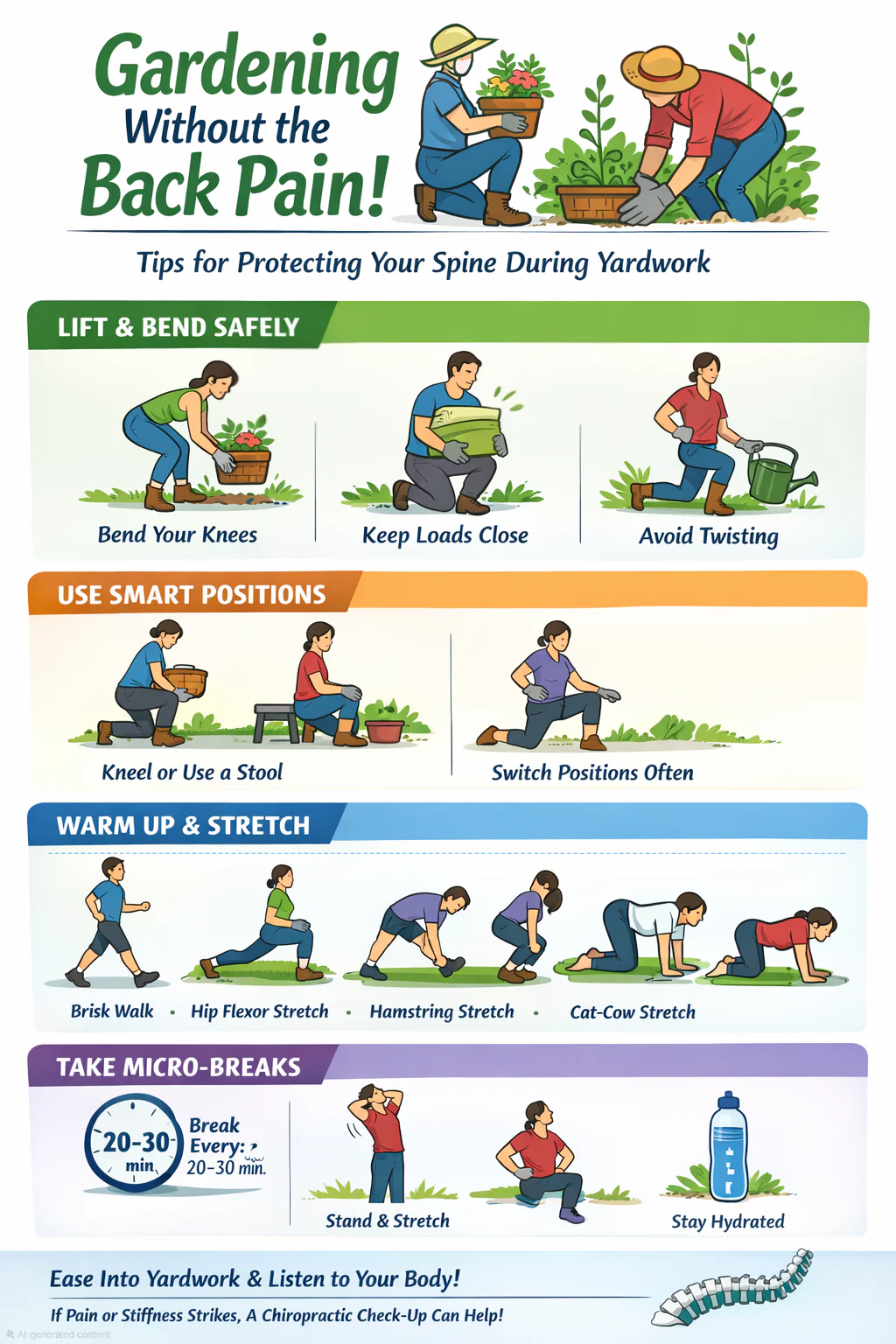
Brisk walk around the yard Arm circles (10 forward / 10 backward) Gentle torso rotations (slow and controlled)
Then add these quick stretches:
Hip Flexor Stretch: Step one foot back, keep torso upright, feel a stretch in the front of the hip (20–30 seconds each side) Hamstring Stretch: One foot forward, hinge at hips with a straight back (20–30 seconds each side) Cat-Cow Movement: Hands on thighs or a bench, gently round and arch your back (8–10 reps) Standing Back Extension: Hands on hips, lean back slightly (5–8 reps)
As you work:
Start with shorter sessions (20–40 minutes) and build up over a couple of weeks. Pushing too hard, too soon is when injuries happen.
Protect Your Back While You Work
Bend with your hips and knees—not your back Avoid rounding forward at the waist. Instead, squat or hinge at your hips while keeping your spine in a neutral position. Keep loads close to your body Whether you’re lifting soil bags, pots, or tools, hold them close to reduce strain on your lower back. Avoid twisting while carrying Turn your whole body with your feet instead of twisting through your spine—especially when holding weight.
Use Smarter Positions
Alternate positions often:
Kneel instead of bending for long periods Use a small stool or gardening bench when possible Switch sides regularly to avoid overloading one area
*Pro tip: Kneeling pads can save both your knees and your back.
Take Micro-Breaks (This Matters More Than You Think)
One of the biggest mistakes I see is trying to “get it all done at once.”
Instead:
Take a short break every 20–30 minutes Stand up, stretch, and walk around Gently extend your back (place hands on hips and lean back slightly) These quick resets help prevent stiffness and reduce injury risk.
Final Thought
Think of spring yardwork like restarting a workout routine—your body performs best when it’s prepared, supported, and moving well.
If you’re noticing stiffness, tightness, or pain as you get back into outdoor projects, it may be a sign your body needs a little extra support.
Scheduling a quick check-up can help keep you moving comfortably all season long.
Enjoy the fresh air—and take care of your back while you’re at it!
Latest Posts

Adjust Your Child's Backpack
August 23, 2026

Physical Preparation for Fall Hunting
August 23, 2026

Getting Strong is a Family First Activity
June 01, 2026